

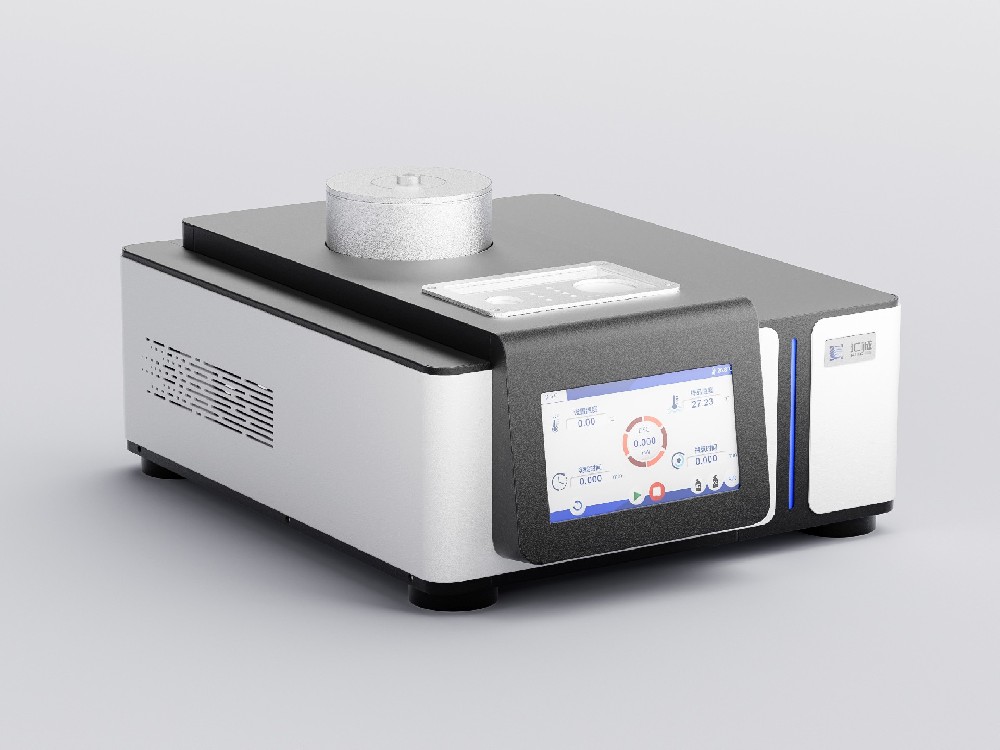
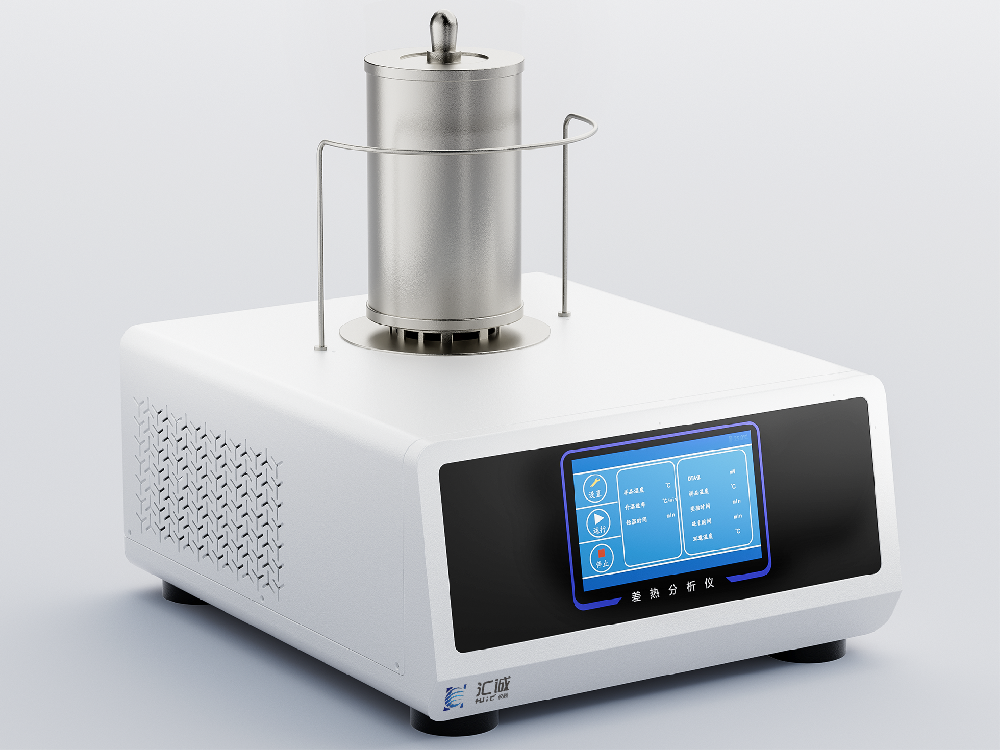
DSC-600M Differential Scanning Calorimeter
Product Category:Differential Scanning Calorime
DSC-600MDifferential Scanning CalorimeterProduct IntroductionInstrument OverviewDifferential scanning calorimetry (DSC, also known as thermal flow DSC) is a classical thermal analysis technique for measuring thermal effe···
Order Hotline:025-52702696
Chat
DSC-600M
Differential Scanning Calorimeter
Product Introduction
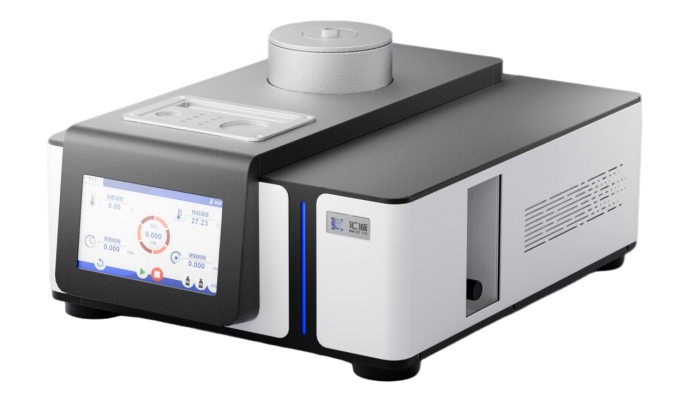
Instrument Overview
Differential scanning calorimetry (DSC, also known as thermal flow DSC) is a classical thermal analysis technique for measuring thermal effects under controlled programmed temperature conditions. It has been widely adopted in a broad range of applications across the fields of materials science and chemistry—including research and development, process optimization, quality inspection and control, as well as failure analysis. Using DSC, researchers can investigate phase transitions in inorganic materials, the melting and crystallization processes in polymer materials, the polymorphic behavior of pharmaceuticals, and the solid/liquid phase composition of foods such as fats and oils.
Instrument Purpose
Measuring physical and chemical changes related to heat, such as the glass transition temperature, melting point, melting temperature, crystallization and crystallization heat, phase transition reaction heat, product thermal stability, curing/crosslinking, oxidation induction period, specific heat capacity, etc.
Main Features
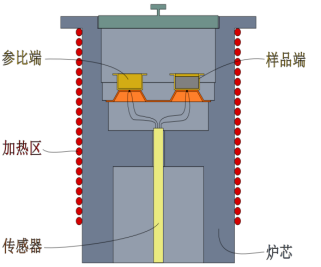
u The second-generation metal thermal conductivity sensor design achieves a higher heat flux per unit temperature gradient, addressing the low thermal conductivity efficiency of the original air-conduction sensors and resulting in a shorter heat transfer time constant.
u The sample chamber employs a concealed atmosphere purging system, ensuring more uniform gas distribution and superior sealing.
u The sample chamber and signal detection zone are designed with an isolation process, providing enhanced corrosion resistance and greater sensor durability.
u The fully integrated design minimizes signal loss and interference, significantly improving signal sensitivity and resolution, and delivering a more stable baseline.
u Equipped with an imported high-frequency core control processor, it offers faster processing speeds and more efficient control.
u It utilizes imported high-sensitivity sensors, effectively improving the sensitivity and accuracy of DSC signals.
u Independent atmosphere control can be intelligently configured via software, allowing the instrument to automatically switch gas pathways for higher experimental efficiency.
u Equipped with a high-precision MFC mass flow controller module, it provides more accurate gas flow control, making it particularly suitable for materials sensitive to atmosphere flow rates during experiments.
u Both the lower-level and upper-level computers of the system feature multi-point temperature calibration, meeting the needs of various experimental scenarios and improving the accuracy of temperature measurements.
u Offers a choice between FTC and STC experimental modes, providing more user-friendly and flexible temperature control. This accommodates the needs of different applications and experiments, ensuring more precise temperature control during the process and more efficient analysis of sensor signals.
u The full temperature control system employs an optimized adaptive dynamic PID algorithm, which significantly mitigates the drawbacks of traditional PID algorithms that require manual adjustment and enhances the robustness of dual-mode temperature control.
u The 12-step programmable temperature control settings allow for greater experimental versatility. The system also features a cyclic scanning function with a configurable cycle count of up to 9,999, and data is automatically saved.
u The sampling frequency of sensor signals is configurable from 1 to 10 Hz, providing greater flexibility in experimental methods and improved data control.
u Two independent temperature sensors allow simultaneous and separate measurement of the furnace temperature and sample temperature.
u The system is capable of conducting experiments involving heating, cooling, and isothermal conditions on various materials.
u The instrument uses bidirectional USB communication and supports automatic connection recovery. The software features an intelligent design with baseline subtraction, automatic graphing during experiments, and automated data processing—such as the calculation of enthalpy, glass transition temperature, oxidation induction period, melting point, and crystallization.
u The software system also includes functions to check for noise and baseline drift, helping users better monitor instrument performance.
Technical Parameter
1 | DSC Range | 0 to ±2000 mW |
2 | Temperature Range | Room temperature to 600 °C |
3 | Sampling Frequency | 16.6 Hz |
4 | Heating Rate | 0.1 to 100 °C/min |
5 | Temperature Resolution | 0.001 °C |
6 | Temperature Fluctuation | ±0.01 °C |
7 | DSC Resolution | 0.1 μW |
8 | DSC Sensitivity | 0.1 μW |
9 | Experiment Mode | FTC and STC freely configurable |
10 | Flow Control | MFC 0 to 200 mL/min, freely configurable via software |
11 | Programmed Temperature Control | Flexible 12-step temperature control throughout all phases |
12 | Temperature Control Method | Heating, isothermal, cooling |
13 | Scan Type | Heating, cooling, isothermal scanning |
14 | Number of Cycles | Cycle count can be set up to 9,999 times, with automatic data saving |
15 | Atmosphere Control | Two atmosphere channels can be freely configured; the instrument switches automatically |
16 | Display Mode | 7-inch 24-bit color LCD touchscreen display |
17 | Data Interface | Standard USB interface |
18 | Sampling Rate | Programmable from 1 to 10 Hz |
19 | Instrument Calibration | Both the lower-level and upper-level computers feature multi-point temperature calibration functionality |
20 | Parameter Standards | Equipped with standard reference materials; users can calibrate temperature and enthalpy themselves |
21 | Instrument Dimensions | 490 × 390 × 215 mm |
reference standard
u GB/T 19466.2–2004 / ISO 11357-2:1999 – Part 2: Determination of the glass transition temperature;
u GB/T 19466.3–2004 / ISO 11357-3:1999 – Part 3: Determination of melting and crystallization temperatures and heat of transition;
u GB/T 19466.4–2016 / ISO 11357-4:1999 – Part 4: Determination of specific heat capacity;
u GB/T 19466.6-2009 / ISO 11357-3:1999 – Part 6 – Determination of the oxidation induction period and oxidation induction time (isothermal OIT) and oxidation induction temperature (dynamic OIT).
- DSC-600M Differential Scanning Calorimeter
DSC-600MDifferential Scanning CalorimeterProduct IntroductionInstrument Overview···
-
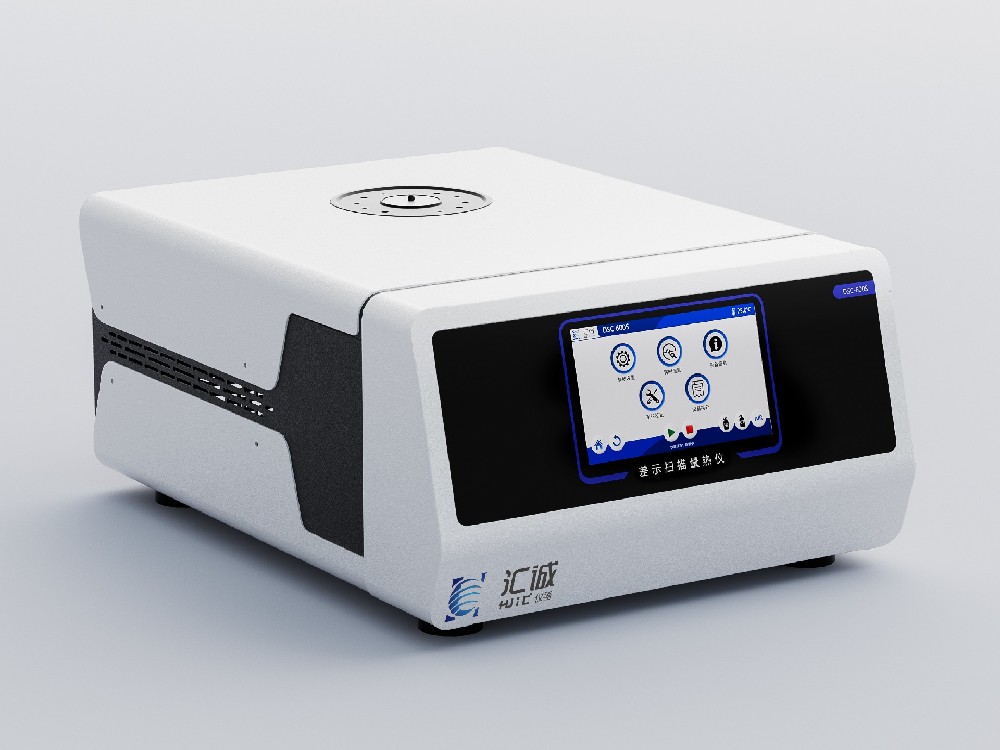 DSC-600S Differential Scanning Calorimeter
Introduction to the instrumentDifferential scanning caloretry method (heat flow ···
DSC-600S Differential Scanning Calorimeter
Introduction to the instrumentDifferential scanning caloretry method (heat flow ··· -
 DSC-1250高温差示扫描量热仪
仪器简介差热分析是在程序控制温度下,测量物质与参比物之间的温度差与温度关系的一种···
DSC-1250高温差示扫描量热仪
仪器简介差热分析是在程序控制温度下,测量物质与参比物之间的温度差与温度关系的一种···
- Nanjing Huicheng Instrument Co., Ltd
- hotline:025-52702696
- service:025-52702696
- email:njhcyq@163.com
- Company Address:Building 47, No. 1001 Fuying Road, Jiangning District, Nanjing City, China